What to do in Kyoto, the ancient capital of Japan

Walking through Kyoto is like stepping into over a thousand years of living history . In this city, where centuries-old temples coexist with wooden streets , Zen gardens , and ancient rituals , time seems to move at a different pace.
Former imperial capital of Japan for over 10 centuries , Kyoto is not just a tourist destination : it is the cultural heart of the country and a privileged gateway to understanding its deepest identity .
Why is Kyoto a world-renowned destination?
Kyoto was founded in 794 as Heian-kyō , becoming the imperial capital of Japan until 1868. During that long period, the city consolidated itself as the political, cultural, and spiritual center of the country.
Unlike other major Japanese cities , Kyoto managed to preserve much of its historical heritage , even after World War II , as it was excluded from the bombings .
Thanks to this exceptional preservation , today Kyoto is home to more than 2,000 temples and shrines , many of them declared World Heritage Sites by UNESCO , as well as imperial palaces , traditional houses (machiya) and historic neighborhoods that maintain centuries-old traditions intact.

Kyoto is world-renowned for representing the essence of traditional Japan . It is the place where classical Japanese arts , such as the tea ceremony , ikebana , Noh and Kabuki theater , are practiced with the greatest rigor, and where it is still possible to see geisha —or geiko , as they are known locally—strolling along cobblestone streets at dusk.
Furthermore, the city offers a unique combination of spirituality , nature , and architecture , making it a must-see destination for both cultural travelers and those seeking contemplative and aesthetic experiences .
Best time to travel to Kyoto
Kyoto is an attractive destination year-round, but some seasons are especially recommended. Spring (March to May) is considered the best time to visit the city, thanks to the cherry blossom (sakura) bloom , which transforms parks , riverbanks , and temples into scenes of ephemeral and symbolic beauty.
Autumn (October and November) is another ideal season, when maple trees turn red, orange, and gold , creating spectacular landscapes , especially in temples and gardens .
Summer (June to August) is hot and humid , with intermittent rain , while winter (December to February) is cold , although it offers a more peaceful experience, with temples covered in snow .
What to eat?

Kyoto's cuisine is renowned for its elegance and balance . Kaiseki stands out, a traditional Japanese haute cuisine presented in several courses that prioritizes aesthetics , flavor , and respect for seasonal ingredients .
Some stars of kaiseki are sakizuke , mukōzuke (sashimi), yakimono , white rice , miso soup , traditional pickles , and a light dessert .
Kyoto is also famous for its use of tofu , as well as dishes such as yudofu , obanzai , and traditional sweets made with matcha green tea .
A must-see: Fushimi Inari-taisha Shrine

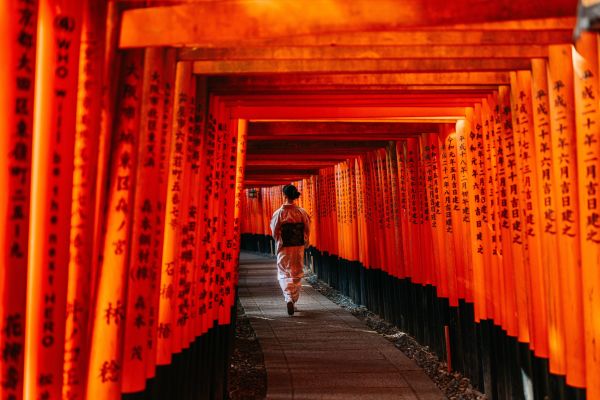
One of the city's most visited icons is the Fushimi Inari-taisha Shrine , famous for its thousands of red torii gates that form endless paths on Mount Inari .
Dedicated to the god of rice and prosperity , this shrine offers a unique visual and spiritual experience , especially at dawn or dusk .
Japan Essentials Tour – Sakura 2026 (12 days / 11 nights)
Main tourist attractions of Kyoto
In the west of the city lies Tenryu-ji Temple , one of Kyoto's great Zen temples and a UNESCO World Heritage Site . Its landscaped garden , designed in the 14th century , blends seamlessly with the natural surroundings .

Nearby, the Arashiyama bamboo forest offers one of Japan's most recognizable sights , an experience that encapsulates the Japanese harmony between nature and spirituality .

Another must-see is Kinkaku-ji or Temple of the Golden Pavilion , whose gold-leaf -covered structure is reflected in a serene pond , a symbol of the refined aesthetics of the Muromachi period .

The Sanjusangendo Temple houses 1,001 statues of Kannon , the goddess of mercy , creating a solemn and moving atmosphere .

To conclude the tour, the Gion district , Kyoto's old town , invites you to explore traditional alleyways , tea houses and wooden facades , where it is still possible to observe the daily life of geishas .

In a modern and vibrant Japan , Kyoto remains a living reminder of the past , offering a profound, authentic, and unforgettable experience.
You might also be interested in: Expan Experience: Touring Buenos Aires, San Martín de los Andes and Mendoza