Osaka: The Venice of Japan and the cuisine of the land of the rising sun

Amidst neon lights, canals reflecting giant signs, and an irresistible aroma of freshly baked dough, Osaka presents itself as the most cheerful, spontaneous, and flavorful city in Japan .
Far from the solemnity of other cities, here you can talk to strangers, laugh out loud, and eat without guilt. It's a destination for those who travel with a desire to live, not just to look around.
Origin, history and a modern, vibrant and approachable present
Osaka 's history stretches back more than 1,400 years. Originally known as Naniwa , it was one of the country's oldest ports and, in 645, the site of an imperial capital. Its prime location on the bay, open to trade with China and Korea, shaped its destiny: to become a city of merchants .
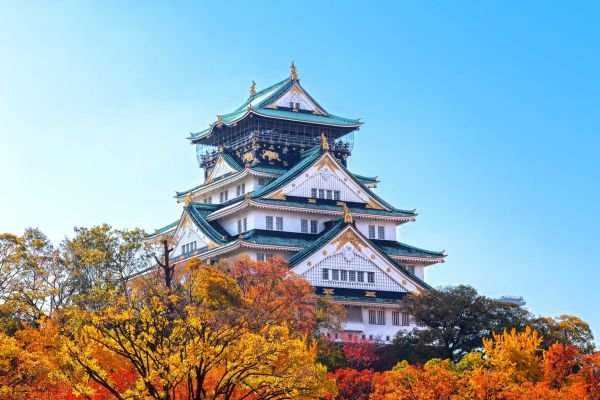
In 1583, the powerful feudal lord Toyotomi Hideyoshi erected Osaka Castle as a symbol of power, and the city grew to become Japan's great commercial center.

During the Edo period , rice, sake, and products from all over the archipelago arrived at its docks and warehouses, and a prosperous merchant class boosted theater, art, and gastronomy.
Today, it is Japan's third-largest city , with over 2.7 million inhabitants and a metropolitan area exceeding 19 million when combined with Kyoto and Kobe. It is an economic and industrial powerhouse, but also a capital of entertainment, humor, and pop culture. Its residents, famous for their open and playful nature, live alongside skyscrapers, theme parks, and neighborhoods that retain their traditional, down-to-earth atmosphere.

Why do they call it the Venice of Japan?
Osaka is known as Suito , the "city of water." Its center is crisscrossed by rivers and canals that for centuries served as the main thoroughfares of commerce, and its numerous bridges are reminiscent of the Italian city.
The most famous is the Dotonbori canal, dug in 1612 and today surrounded by restaurants, neon signs and the famous Glico corridor sign.
Unlike Venice, here water coexists with the futuristic energy of a major metropolis. Canal cruises , especially at sunset, offer a different perspective: bridges, temples, and glass buildings reflected in the flowing water.

Why is it Japanese cuisine?
The nickname "Tenka no Daidokoro," meaning "the nation's cuisine," originated during the time when Osaka concentrated the rice and food production that supplied the country. With so much raw material readily available, its people perfected the art of cooking and adopted the philosophy of kuidaore : eating until you're exhausted, savoring every bite.
Their street food is a celebration of the everyday. Takoyaki are balls of batter filled with octopus, coated in sauce and dried bonito flakes, while okonomiyaki is a kind of savory pancake with cabbage, meat, or seafood, cooked on a griddle.
Kushikatsu , on the other hand, consists of breaded and fried skewers that are dipped in sauce without being re-dipped. Oshizushi , a boxed sushi, and udon , noodles in broth, complete the classics of local tradition.

Tour of the best of Japan from Tokyo to Osaka (10 days / 9 nights)
Must-see tourist attractions in Osaka
The must-see Osaka Castle , surrounded by a vast park, is ideal for viewing the cherry blossoms in spring. Furthermore, Osaka is the perfect base for excursions to Kyoto , Nara , and Himeji , with its imposing white castle.
Dotonbori and Namba are the city's nightlife and culinary heart, and Kuromon Market is the perfect place to sample fresh seafood, fruit, and sweets. For a retro-inspired stroll with plenty of character, Shinsekai and Tsutenkaku Tower are the best choices.

Panoramic views, especially at sunset, can be enjoyed from the Umeda Sky Building . For entertainment, Universal Studios Japan is home to Super Nintendo World , and the Kaiyukan Aquarium , one of the largest in the world, greets visitors with a whale shark.
The spiritual note is provided by the Sumiyoshi Taisha Shrine , one of the oldest Shinto temples in the country.

How to get to Osaka from Tokyo
The most convenient option is the Tokaido Shinkansen bullet train , which connects Tokyo Station to Shin-Osaka over approximately 515 kilometers. The Nozomi service takes about two and a half hours, with frequent departures throughout the day.
You can also travel by plane from Haneda Airport to Itami or Kansai in about an hour and ten minutes, although when you add up transfers, the train is usually more convenient.
For those seeking a budget-friendly alternative, overnight buses take approximately eight hours.

Osaka is meant to be experienced and savored . The Japanese Venice and the cuisine of the Land of the Rising Sun teach us that travel is also about being open to surprises. Those who arrive seeking a destination leave with one certainty: in Japan, your appetite always ends up in Osaka .
You might also be interested in: Expan Experience: The beauty of Patagonia in Punta Arenas, Puerto Natales and Torres del Paine