How Hiroshima became a tourist destination

Few cities in the world carry such a painful history and, at the same time, convey so much hope. Hiroshima , in southwestern Japan , was reduced to rubble in a matter of seconds. More than eight decades later, it welcomes millions of travelers who come seeking remembrance , reflection , and also a modern, green, and vibrant city.
This is the story of how that transformation happened.
A day that changed history
On August 6, 1945, at 8:15 a.m., Hiroshima became the first city in the world to be attacked with an atomic bomb . The explosion leveled the city center and destroyed most of the buildings. Tens of thousands of people died instantly, and by the end of that year, estimates put the death toll at around 140,000.
No one imagined then that that landscape of ashes could once again become a meeting place. During the first few years, the priority was survival. It was even said that nothing would ever grow there again, but nature proved them wrong: a few months later, green shoots emerged from the wreckage, and several trees that survived the explosion still stand today as living witnesses .

From the ashes to reconstruction
The turning point came in 1949, when Japan passed the Peace Memorial City Construction Law . With it, Hiroshima stopped thinking only about replacing what had been lost and began to envision a new purpose: to be a universal symbol of peace .
That decision set the course. A new urban layout was designed with wide avenues and open spaces, and the heart of the city was designated as a large memorial park. In 1955, the Peace Memorial Museum opened its doors, showing the world, without embellishment, what had happened.
The first visitors were survivors, relatives and pacifist delegations, and with them, almost unintentionally, a very particular form of memory tourism was born.

The Peace Memorial Park, the heart of the trip to Hiroshima
Today, any visit to Hiroshima begins at the Peace Memorial Park , located at the spot where the bomb fell. Its design is sober and deliberate: every corner invites silence and reflection .
The most recognizable image is the Atomic Bomb Dome (Genbaku Dome), the remains of a building that miraculously survived and is preserved exactly as it was after the explosion. Nearby is the Children's Peace Monument , inspired by the story of Sadako Sasaki, the girl who folded paper cranes in the hope of healing. Even today, garlands of thousands of cranes arrive from schools all over the world.
The Peace Memorial Museum , renovated in recent years, completes the experience with personal belongings, photographs, and survivor testimonies. It's not a light visit, but many travelers describe it as one of the most transformative of their lives.

Worldwide recognition
Hiroshima's consolidation as a tourist destination came with international recognition. In 1996, the Atomic Bomb Dome was declared a UNESCO World Heritage Site , an unusual designation due to its nature: it doesn't celebrate the beauty of a monument, but rather serves as a warning to humanity.
Other milestones reinforced that visibility. In 2016, Barack Obama became the first sitting US president to visit the Peace Memorial Park, a gesture that resonated around the world. In 2023, the city hosted the G7 Summit , which once again placed Hiroshima at the center of the global conversation on nuclear disarmament and diplomacy.
Sakura Season in Japan: March – April 2027 (15 days / 14 nights)
Beyond memory: a city to enjoy
To reduce Hiroshima to its history would be to only scratch the surface. Part of its current appeal is that the city looks to the future , with a vibrant daily life and a tourist offering that goes far beyond museums.
Food alone is reason enough to travel. Hiroshima-style okonomiyaki , layered with noodles, cabbage, egg, and pork belly on a hot griddle, is a local specialty. The region is also Japan's largest producer of oysters , which are enjoyed fresh, grilled, or fried during the cooler months.

Just a short train and ferry ride away lies Miyajima Island , home to the Itsukushima Shrine and its famous floating torii gate , another World Heritage Site. At sunset, when the tide rises, the gate appears to levitate above the water, making it one of the most photographed sights in the country.
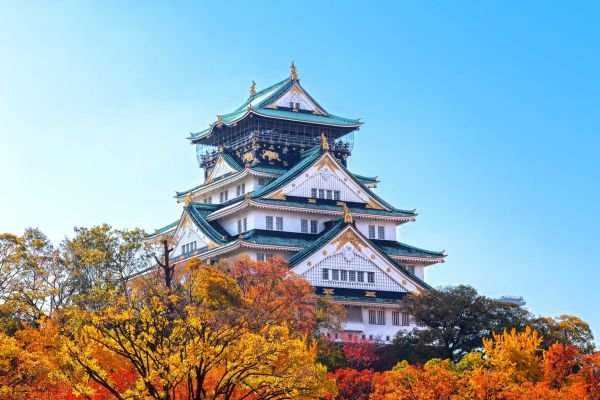
Within the city itself, it's worth mentioning Hiroshima Castle , rebuilt after the war, and Shukkei-en Garden , a tranquil oasis by the river. Sports fans can catch a game of the Hiroshima Toyo Carp , the region's most beloved baseball team, and experience a festive and passionate atmosphere.

Hiroshima: a destination with a purpose
Hiroshima attracts over 1.5 million visitors each year to its museum alone, with a growing proportion of foreign tourists. Getting there is easy thanks to the bullet train , which connects it to Tokyo, Osaka, and Kyoto, and getting around the city is simple on its historic streetcars, which resumed service just days after the bombing and are now an integral part of its identity.
What distinguishes this city is the meaning it gives to the visit. Those who come are not just looking for photos, but to understand, to remember, and to take away a message. Hiroshima offers something uncommon in contemporary tourism: the possibility of traveling to reflect and, at the same time, to enjoy , without one canceling out the other.

Its transformation demonstrates that a place can reinvent itself without erasing its past. Hiroshima does not hide its wound; it transformed it into an invitation to peace .
You might also be interested in: How to see the Northern Lights from a cruise ship in Norway