

Taboga, Panama’s paradisiacal flower island

There are islands you visit, and there are islands that visit you forever. Taboga belongs to the second group.
Imagine this: It's 9:00 a.m., you're aboard a ferry that has just departed from the Amador Causeway , right in the heart of Panama City . In less than half an hour, the skyline of skyscrapers you left behind has vanished into the horizon, and before you emerges a silhouette of hills covered in emerald-green vegetation , colorful houses, and flowers bursting forth everywhere as if nature had set out to leave not a single inch unadorned. Welcome to Taboga Island .
Known worldwide as the Island of Flowers , Taboga owes its nickname to the exuberance of its tropical vegetation , which blooms practically year-round. Red bougainvillea , orange blossoms , hibiscus , and countless other tropical species carpeted its slopes long before the first travelers recorded their impressions—and they rarely found words sufficient to describe what they saw.

Taboga, bathed by the Pacific Ocean , has a tropical climate , with temperatures ranging between 27 and 32°C year-round. The dry season runs from December to April and is considered the ideal time to visit: sunny days, clear skies, and calm seas allow you to fully enjoy the beaches and trails.
The rainy season — from May to November —in no way diminishes the island's appeal. The rains are usually short and intense, leaving the rest of the day with clear skies and even more lush vegetation. Furthermore, between July and October, one of the most exciting spectacles in the Panamanian Pacific unfolds: the migration of humpback whales .
A treasure trove of attractions in a small format
Taboga occupies just 12 square kilometers , and yet it achieves what many large destinations fail to do: it ensures that the traveler never feels like something is missing.
In the town of San Pedro , where cars are virtually nonexistent, one can wander through narrow alleyways flanked by colonial houses painted yellow, turquoise, and terracotta, with gardens overflowing with flowers that peek over the walls as if they wanted to greet you.

For hiking enthusiasts, the island offers a circuit with four trails that wind through rainforest and lead to spectacular viewpoints. Cerro del Vigía , the island's highest point, was used by the United States during World War II to monitor the entrance to the Canal; today, from its summit, the view of the Panamanian skyline and the giant cargo ships sailing toward the canal is simply breathtaking.
The Cerro de la Cruz , for its part, houses a monumental cross from where you can see the neighboring island of Urabá and the town of San Pedro spread out like a map.
Beaches, bird watching and much more in Taboga
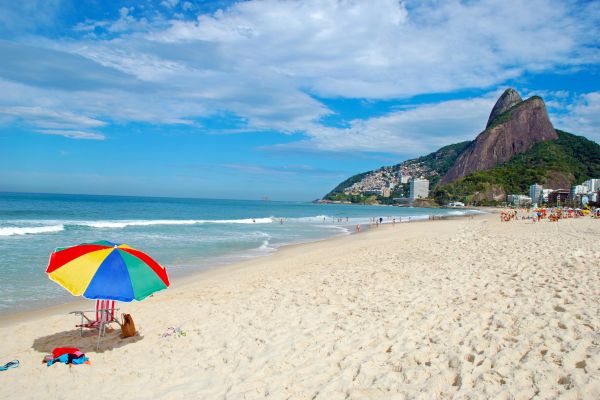
Taboga has three main beaches , each with its own character, and together they offer something for all types of travelers:
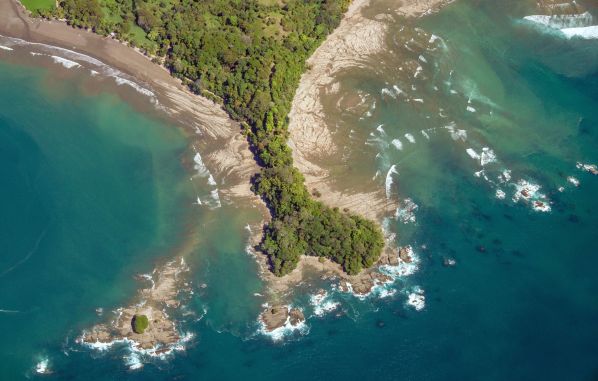
- La Restinga : In the north of the island. When the tide goes out, an impressive sandbar connects the beach with the islet of El Morro , creating an ephemeral passage that disappears with each rise of the sea.
- Playa Honda : The most family-friendly and lively beach. Close to the town, with a children's playground and accessible entrances for people with reduced mobility. Perfect for a getaway with children.
- Piedra Llana Beach : Accessible only by boat. A secret hidden among rocks, with crystal-clear waters and almost absolute silence. The kind of place you don't want to tell anyone about.

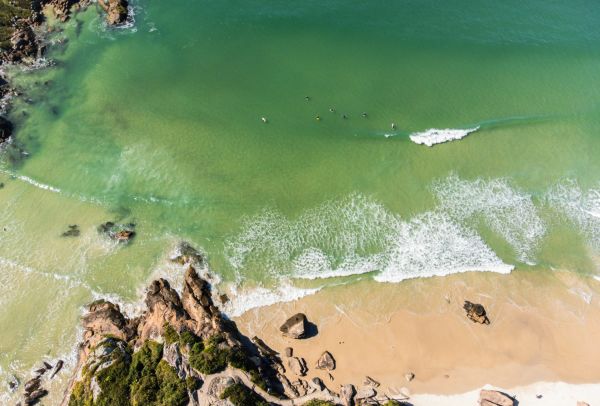
In addition to swimming and sunbathing, the water sports offer includes stand-up paddleboarding , snorkeling , kayaking , sport fishing and boat tours to circle the island and discover small coves hidden among the rocky coast.
Eighty-nine percent of Taboga's territory is a protected natural reserve . It is home to more than 124 species of birds , and the island, along with neighboring Urabá, harbors one of the world's largest breeding colonies of brown pelicans .
Between July and October , the sighting area extends to the surrounding waters: it is the season for humpback whales , which migrate from the coasts of the South Pacific and can be seen from the ferry itself or on private tours.
The perfect trip: Taboga + Panama City
One of Taboga's great virtues is that it enhances any trip to Panama City rather than competing with it.
The Panamanian capital is, in itself, a top-level destination: the Panama Canal —one of the wonders of modern engineering—, the Old Quarter with its colonial architecture declared a World Heritage Site , the modern skyline that rivals any Latin American metropolis, the craft markets, the museums and an urban gastronomy that reflects the diversity of its history.

And just when travelers need to escape the urban frenzy to breathe, Taboga is there, half an hour away. The most common—and wisest—plan is to dedicate two or three days to Panama City and reserve a full day for the island: take the first ferry in the morning, explore the trails, eat by the sea, stay on the beach until the sun begins to set, and return on the last ferry in the afternoon with lungs full of salty air and a strange feeling of having traveled much farther than the map indicates.
For those who want to extend the experience, the island has hotels and accommodations of different categories that allow you to stay overnight and wake up to the sound of the waves before the boats of the day arrive.

The Island of Flowers knows nothing of haste. It invites you to walk slowly, to sit where the path ends, to gaze at the horizon without quite knowing if what you see is the past or the future. In Taboga, both seem the same.
You might also be interested in: The best beaches in northern Peru: Máncora, Punta Sal and more